
Every one of the 16 Socionics Insight characters is a small Model A diagram you can read at a glance, and once you know the code you can name a type from its drawing alone.
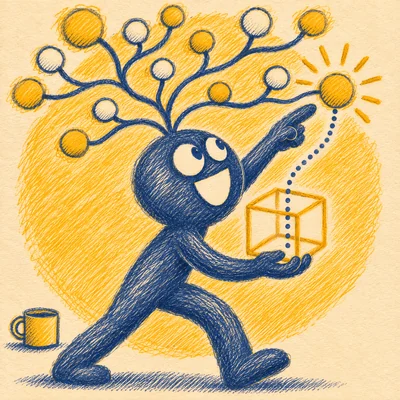
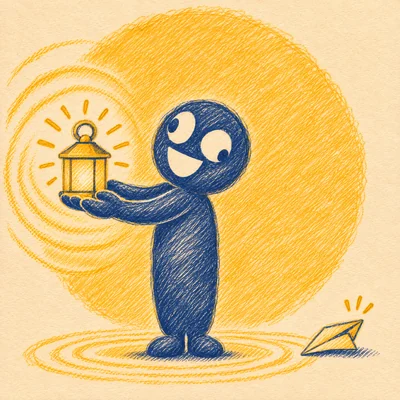
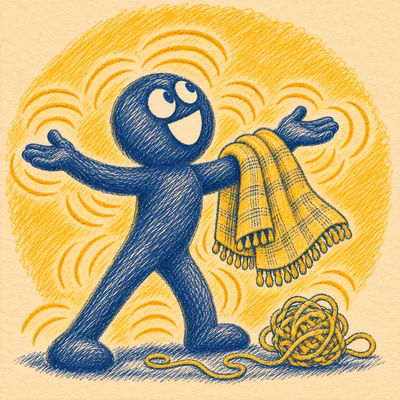
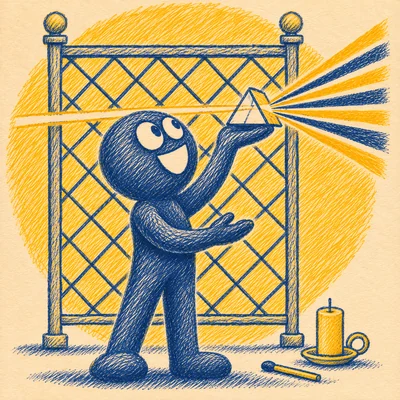
I didn't set out to make a puzzle, but that's what the characters became. Each figure's pose, the object in its hands and the little item at its feet all come from the type's two strongest functions, and the background colour marks its quadra: yellow for Alpha, red for Beta, green for Gamma and blue for Delta.
A sharp-eyed member of the Socion Discord cracked most of this before I'd explained any of it. This article is the full key.
The three layers
Each character carries three clues, and two of them point to the same function.
- The pose is the leading function. It's what the figure is or does with its whole body: a tree growing from the head, a lunge forward, a glow in the chest. The leading function is the type's most natural way of being, so it lives in the body rather than in the hands.
- The held object is the creative function. The creative function is the tool a type picks up to put its leading function to work, so it's literally the thing in the character's hand.
- The corner object repeats the leading function. The small item at the feet is shared by the two types with the same leading function, so ILE and IEE both have a mug, while SLE and SEE both have a compass.
Read the pose and the object together and you have the type's ego block, which is enough to name it.
The key
Eight elements, three symbols each. Find the pose, find the object, and you've found the type.
| Element | Leading: pose | Creative: held object | Leading: corner object | Types that lead with it |
|---|---|---|---|---|
| Ne | Tree branching from the head | Prism splitting light | Mug | ILE, IEE |
| Ni | Swirl circling the head | Hourglass | Kite | IEI, ILI |
| Se | Lunging forward stride | Flag | Compass | SLE, SEE |
| Si | Calm stance on rippling ground | Towel or blanket | Paper plane | SEI, SLI |
| Te | Climbing a staircase | Lever, weight or machine | Potted plant | LIE, LSE |
| Ti | Lattice framework behind | Cube | Candle | LII, LSI |
| Fe | Open arms with motion lines | Lantern | Ball of yarn | ESE, EIE |
| Fi | Glow at the chest | Ribbon | Small toadstool | ESI, EII |
Why these symbols
Every symbol is a picture of what the element pays attention to.
- Ne: a tree keeps branching into new possibilities, and a prism splits one beam into many colours.
- Ni: a swirl is time folding round on itself, and an hourglass is time you can watch running out.
- Se: the lunge is pressure and presence, the flag claims ground, and the compass sets a firm direction.
- Si: rippling ground is someone tuned to how things feel right now, and the towel is comfort you can hand to someone else.
- Te: the staircase is steady, measurable progress, and the lever gets real work done for less effort.
- Ti: the lattice is a structure where every point connects, and the cube is a clean, closed model of how something works.
- Fe: open arms broadcast feeling to the whole room, and the lantern lights up the mood around it.
- Fi: the glow in the chest is a private, steady sense of who matters, and the ribbon ties two people together.
The corner objects are smaller, everyday echoes of the same idea. A mug for Ne's next idea over coffee, a kite for Ni's eye on where the wind is going, a candle for Ti's quiet focus.
Worked example: ILE and SEI
Duals complete each other's drawings: what one character has in its body, the other is missing, and the other way round.
ILE (Ne-Ti). A tree bursts out of the head (Ne leading), a cube sits in the hands (Ti creative), and a mug waits at the feet (Ne corner). The figure is mid-stride, reaching for the next idea.
SEI (Si-Fe). The ground ripples under calm feet (Si leading), a glowing lantern is held out (Fe creative), and a paper plane rests in the corner (Si corner). The figure is still and warm where ILE is restless.
In Model A, ILE's suggestive and mobilising functions are Si and Fe, the very pair SEI leads with, and SEI's are Ne and Ti. Put the two drawings side by side and between them they hold all four Alpha symbols.
Spot the pattern
Laid out by quadra, the grid shows the system in every row: four types, one colour, and the same four elements shared between them.
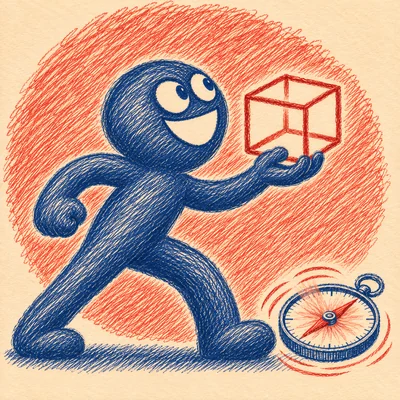
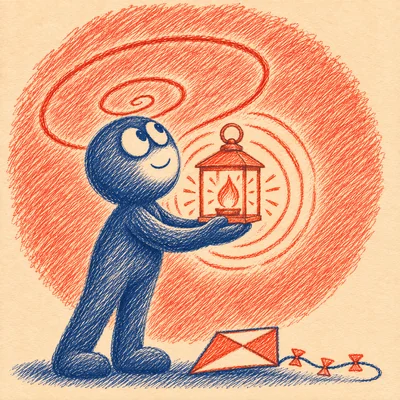
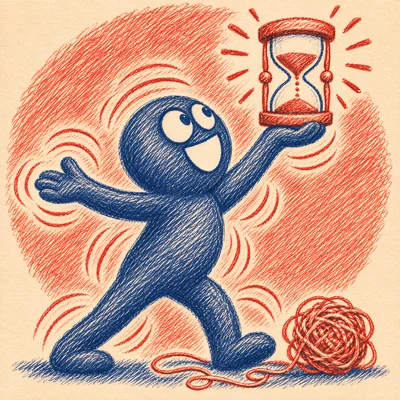
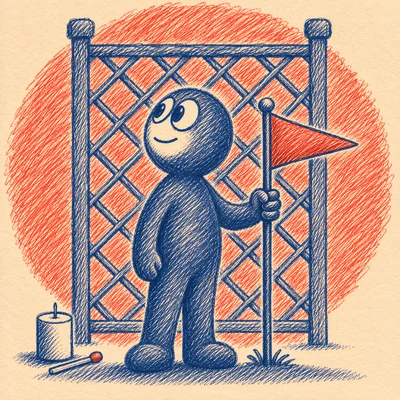
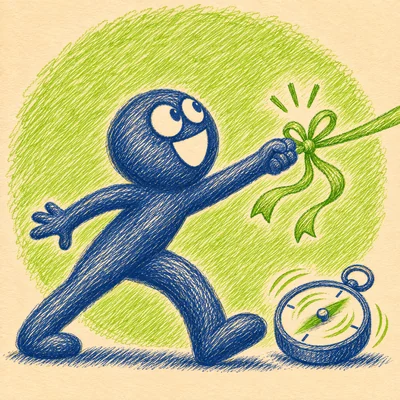
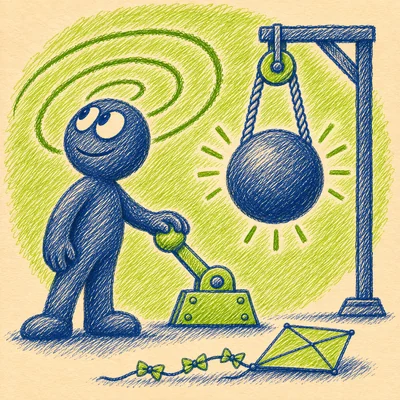
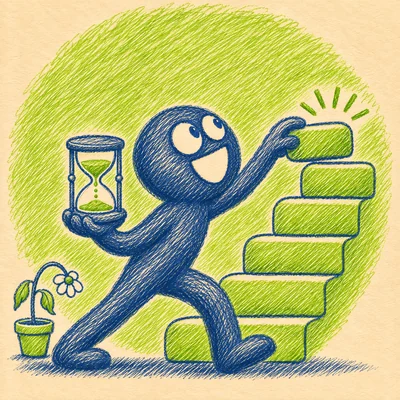
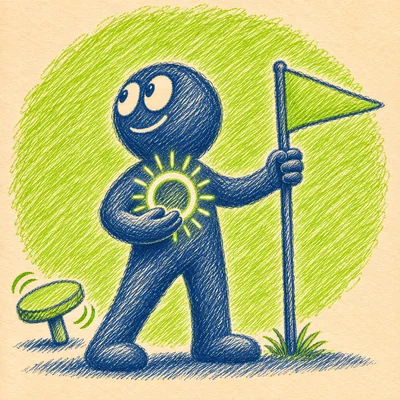
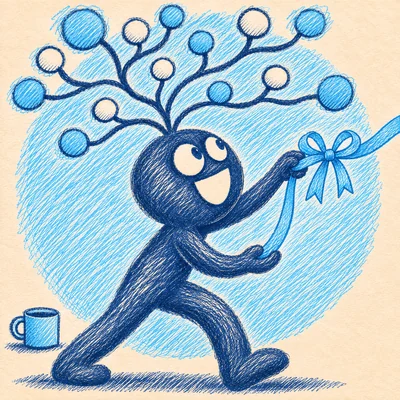
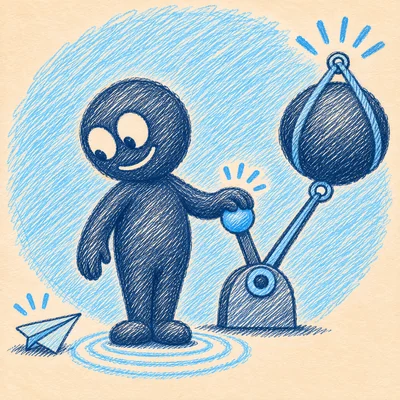
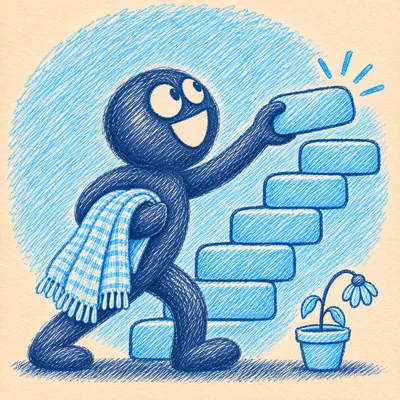
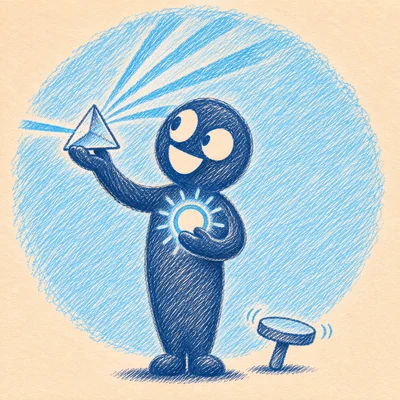
| Quadra | Colour | Types, left to right | Elements every character in the row uses |
|---|---|---|---|
| Alpha | Yellow | ILE, SEI, ESE, LII | Ne, Ti, Si, Fe |
| Beta | Red | SLE, IEI, EIE, LSI | Se, Ti, Ni, Fe |
| Gamma | Green | SEE, ILI, LIE, ESI | Se, Fi, Ni, Te |
| Delta | Blue | IEE, SLI, LSE, EII | Ne, Fi, Si, Te |
Try it before you check the table: cover the type names, pick any character, and name it from the pose and the object alone. Then find its dual: the same colour, showing the two elements your first character doesn't.